Difference between RSP and VOO ETF
Both invest in the same 500 companies (S&P 500)

Difference between:
- Invesco S&P 500 Equal Weight ETF (RSP)
- Vanguard S&P 500 ETF (VOO)
Core Difference (this is EVERYTHING)
Both invest in the same 500 companies (S&P 500) — but the way they weight them is completely different:
-
VOO ? Market-cap weighted
- Bigger companies = bigger influence
- Apple, Microsoft, Nvidia dominate
-
RSP ? Equal-weighted
- Every company gets ~0.2%
- Small and mid companies matter more
- This single difference drives returns, risk, diversification, and cost
Side-by-Side Comparison
| Feature | RSP | VOO |
| ----------------- | ------------------------------------ | ----------------- |
| Strategy | Equal weight | Market-cap weight |
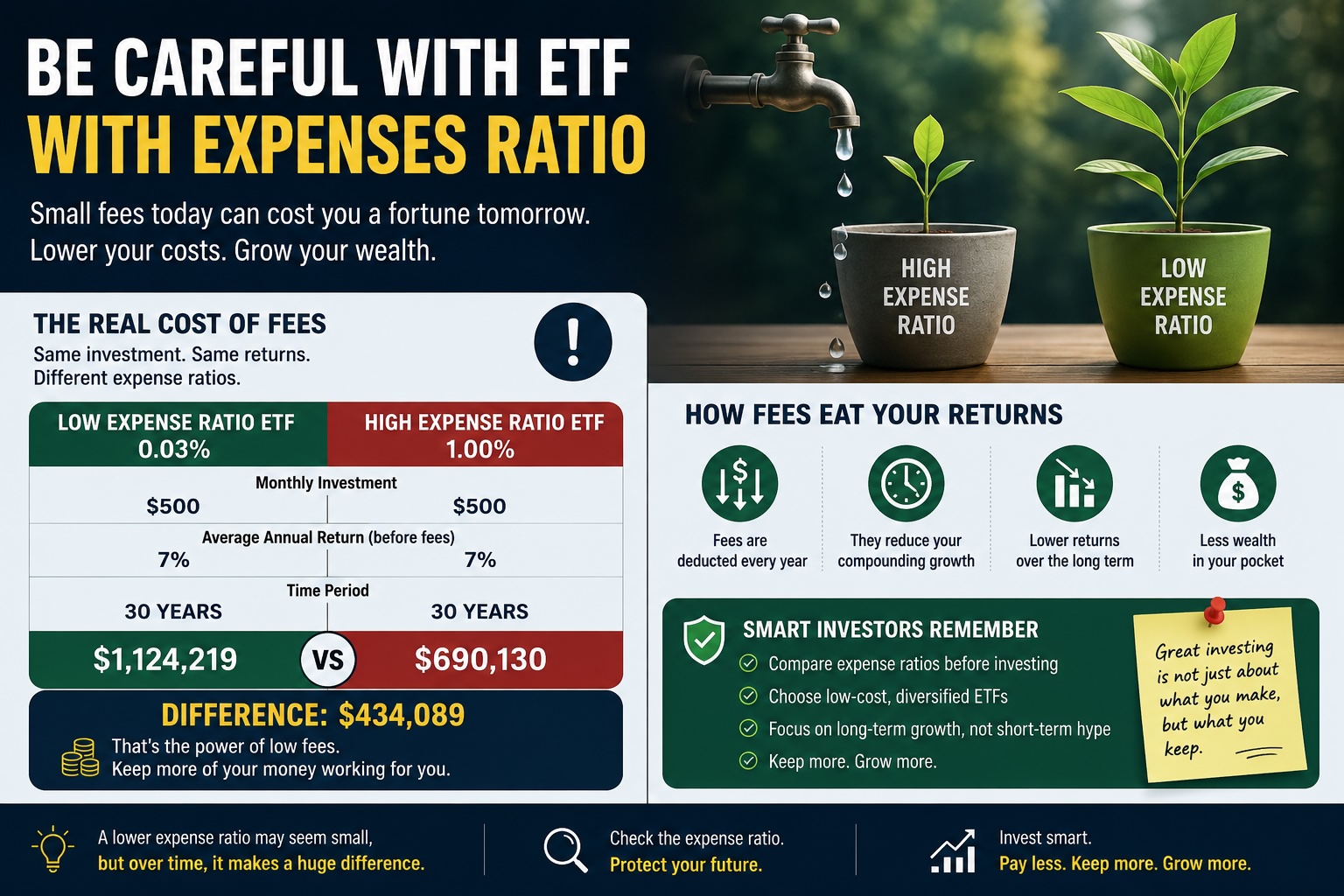
| Expense ratio | ~0.20% | ~0.03% |
| Diversification | Very high (balanced) | Lower (top-heavy) |
| Tech exposure | ~16% | ~30–35% |
| Top 10 weight | ~3% | ~30%+ |
| Long-term returns | Lower | Higher |
| Volatility | Slightly higher | Slightly lower |
| Rebalancing | Quarterly (sell winners, buy losers) | Passive |
Sources: (ETF Database)
Performance (important reality)
-
Over the last 10+ years, VOO has clearly outperformed (Quantflowlab)
-
Example:
- $10K ? VOO Ëś $39K
- $10K ? RSP Ëś $29K (Quantflowlab)
- Why? Because mega-cap tech (Apple, Nvidia, Microsoft) dominated the market.
Risk & Behavior Differences
VOO (market-cap)
Pros
- Lower cost
- Strong historical returns
- Simple, “set and forget”
Cons
- Very concentrated in a few stocks
- If big tech drops ? you feel it hard
RSP (equal-weight)
Pros
- Much better diversification
- Less dependent on big tech
- “Buy low, sell high” built-in (rebalancing)
Cons
- Higher fees
- Lower returns during tech-driven markets
- More turnover (less tax efficient)
When Each One Wins
VOO wins when:
- Big tech dominates (like 2020–2025)
- Market is driven by a few winners
RSP wins when:
- Broader market rallies (small/mid caps)
- Market leadership rotates
- Tech underperforms
- This is why results flip depending on market cycles (The Motley Fool)
So… Which Is Better?
For most investors ? VOO is better
- Lower cost (huge advantage long-term)
- Higher historical returns
- Simpler strategy
Best for:
- Long-term investing (like your VOO plan)
- Passive wealth building
- “Don’t overthink it” approach
RSP is better if you want:
- More diversification
- Less tech concentration
- A different strategy than the standard S&P 500
? Best for:
- Reducing dependence on mega-cap stocks
- Adding variety to a portfolio
Smart Strategy (what many investors do)
Instead of choosing one:
Combine both:
- 70–90% VOO
- 10–30% RSP
This gives you:
- Growth (VOO)
- Diversification (RSP)
- VOO = growth + low cost + proven winner
- RSP = diversification + balance + alternative exposure
-
If you asked me simply:
-
“Which one should I invest in?”
- I’d say: VOO as your core holding
- Add RSP only if you understand why you want it
All articles here is not a recommendation.
We just show examples and you need to analyze.
Related articles
Comparing IVV, VOO and QQQ
Check and see what is better for you
S&P 500 ETF SPY
Is one of the most popular exchange-traded funds
Investing in VOO for 15 years
I have $1,000 and plan to invest $600 monthly
Mauricio Junior